What's The Big News?
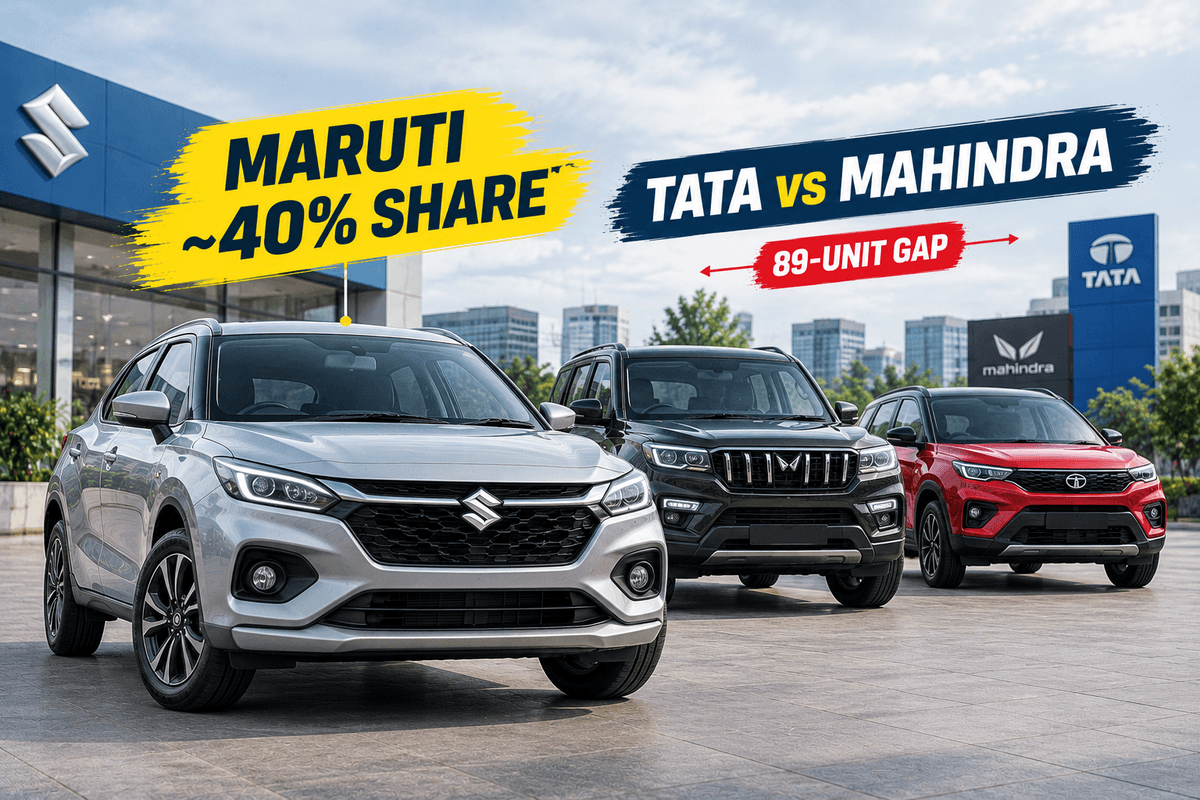
Alright folks, grab a chai, because the numbers from the first half of Fiscal Year 2027 are out, and trust me, they're spicy! Maruti Suzuki, the OG of Indian roads, has done it again – they've clawed their way back above the crucial 40% market share mark (yes, really). It's a significant milestone for them, showing their recent strategies are paying off big time.
But that's not the only headline. We've got a new contender seriously shaking things up: Tata Motors. They've pushed past Mahindra to become India's third-largest carmaker by volume, a testament to their aggressive product push and strong focus on EVs. Meanwhile, Hyundai, a consistent strong performer, seems to have lost a bit of its footing. The battle for your garage just got a whole lot more interesting, hasn't it?
Maruti Suzuki's Grand Comeback: How They Did It
Look, for years, many of us wondered if Maruti could really get back to their dominant self, especially with so many new players and segments emerging. Well, H1 FY27 clearly says, "Yes, they can!" Their comeback above 40% isn't just luck; it's a meticulously planned execution. They finally got serious about SUVs, a segment where they were lagging big time. Models like the Grand Vitara, Fronx, and even the Jimny, despite its niche appeal, have started pulling their weight.
It's not just about new models though. Maruti knows the pulse of the Indian buyer. They've focused on maintaining their core strengths: fuel efficiency, low maintenance, and a widespread service network that reaches even the remotest corners. Plus, their aggressive pricing strategy for many new launches, often undercutting rivals, has clearly resonated. They've blended their traditional strengths with a fresh product portfolio, and honestly, it shows. They're giving people options in every budget, from the Alto to the Grand Vitara, and buyers are responding.
Tata Motors On The Rise: A Serious Challenger Emerges
Here's the thing — Tata Motors isn't just growing; they're transforming. Overtaking Mahindra is no small feat, especially in a market as competitive as India. What's driving this surge? A clear, unwavering focus on three pillars: safety, design, and electric vehicles. Their 'New Forever' philosophy brought us cars that look good, feel premium, and crucially, score high on crash tests – something Indian buyers are increasingly valuing.
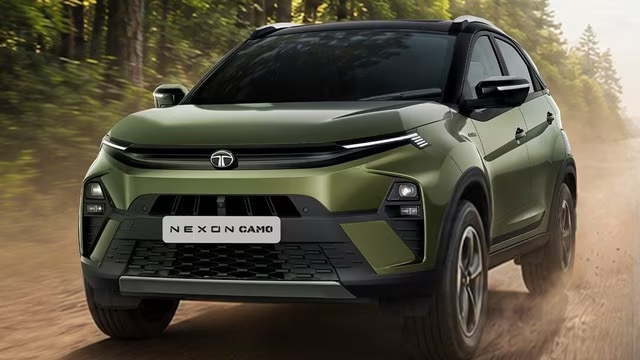
Then there's the EV game. Tata practically owns the affordable EV space with the nexon-ev">Nexon EV and tiago-ev">Tiago EV. They saw the future, invested early, and are now reaping the benefits. They've made electric mobility accessible to the masses, and that's a massive differentiator. Mahindra, on the other hand, while strong in its SUV lineage, perhaps hasn't been as nimble in adapting to the EV wave at scale, and some of their newer launches haven't quite hit the same sweet spot in terms of volume. This isn't to say Mahindra is out of the race, but Tata's momentum right now is undeniable.
Market Share Snapshot: H1 FY27 Numbers
Let's put some numbers to these shifts. While official exact figures are yet to be revealed for all players, the trends are pretty clear from what we're seeing in the industry reports.
Manufacturer | H1 FY27 Market Share (Approx.) | H1 FY26 Market Share (Approx.) | Change (Approx.) |
|---|---|---|---|
Maruti Suzuki | 40%+ | Below 40% | ↑ Positive |
Tata Motors | Expected ~14-15% | Expected ~13-14% | ↑ Positive |
Hyundai India | Expected ~13% | Expected ~14.5% | ↓ Negative |
Mahindra & Mahindra | Expected ~12-13% | Expected ~13.5% | ↓ Negative |
Others | Varies | Varies | Mixed |
These aren't final, precise numbers, but they reflect the broad movements we're seeing. Maruti's gain is significant, and Tata's consistent climb is impressive. Hyundai and Mahindra, while still strong players, will certainly be strategizing hard after these figures.
The Shifting Sands: What This Means For Rivals
So, what does this mean for the rest of the pack? Hyundai, for one, needs to seriously re-evaluate its strategy. While they've got fantastic products like the Creta and Venue, perhaps their portfolio needs more aggressive pricing in some segments, or a bolder move into the mass-market EV space to compete with Tata. They've always been known for features and premium feel, but the Indian market is now looking for more than just that.
Mahindra will undoubtedly be pushing hard with its upcoming electric SUVs and refining its existing lineup. Their XUV700 and Thar continue to be blockbuster hits, but they need to translate that excitement across more models to regain lost ground. Other players, from Kia to Toyota, will also be watching these shifts closely. The Indian car market isn't just about launching a car anymore; it's about understanding the evolving buyer, being agile, and having a clear long-term vision. This intensified competition is only going to benefit us, the consumers, in the long run.
The Good And The Not-So-Good
What We Like
- Increased Competition: A more dynamic market means brands have to work harder, innovate more, and offer better value.
- Tata's EV Push: Their success makes EVs more mainstream and accessible for the average Indian family.
- Maruti's Adaptability: Proves even giants can change their game, bringing newer, relevant products.
- Focus on Safety: Tata's high safety ratings are influencing other brands to prioritize it too, which is a win for everyone.
What Could Be Better
- Hyundai's Stagnation: A strong Hyundai pushes the market forward; their current dip suggests a need for re-evaluation.
- Missed Opportunities: Some brands are still slow to react to evolving consumer demands, especially in the affordable EV or hybrid space.
- Potential Price Wars: While good for buyers short-term, aggressive price cuts can sometimes impact R&D and quality down the line.
What This Means For Your Next Purchase & The Road Ahead
For you, the Indian car buyer, these market shifts are mostly good news. More competition usually means better products, more features for your money, and potentially more aggressive pricing. If you're looking at a Maruti, you'll find a broader range of options now, from traditional hatchbacks to proper SUVs. If you're considering an EV, Tata's dominance means continued innovation and perhaps even more charging infrastructure support from them. You'll likely see other brands trying to catch up, meaning more choices in the electric segment soon.
The road ahead for the Indian auto industry looks incredibly exciting. We're seeing a clear shift towards SUVs and EVs, and brands that adapt quickly are the ones that will thrive. Expect more hybrid tech, more connected car features, and hopefully, even better safety standards across the board as manufacturers jostle for position. It's a great time to be in the market for a new set of wheels, isn't it?
Our Verdict
The H1 FY27 market share numbers aren't just dry statistics; they're a clear report card for the Indian auto industry. Maruti Suzuki has shown incredible resilience and strategic prowess in reclaiming its dominant position, proving that understanding the mass market is still their forte. Tata Motors, with its unwavering commitment to safety and EVs, has rightfully earned its spot as a serious top-tier player. Their rise is a fantastic story of innovation meeting consumer demand.
Meanwhile, Hyundai's slip is a reminder that even established players can't rest on their laurels. The game is constantly evolving. Honestly, this kind of shake-up is exactly what the Indian auto market needs. It keeps everyone on their toes, pushing for better products and services for us, the consumers. It's a dynamic, exciting landscape, and we're here for every twist and turn.