What's The Big News?
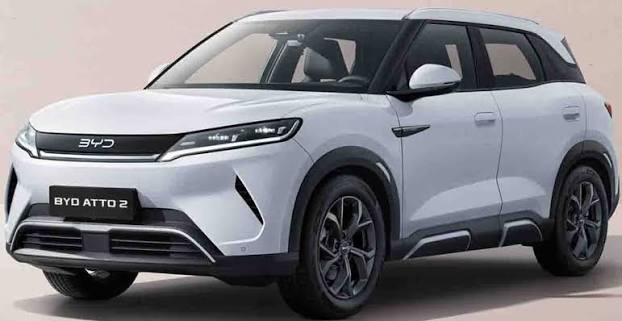
Big news for electric car buyers! BYD's newest compact electric SUV, likely to be called the Atto 2 in international markets, has just been caught testing right here on Indian roads. Camouflage couldn't hide its distinct crossover stance, and this heavy testing signals that the Chinese EV giant is finally looking to enter the high-volume budget EV space in India.
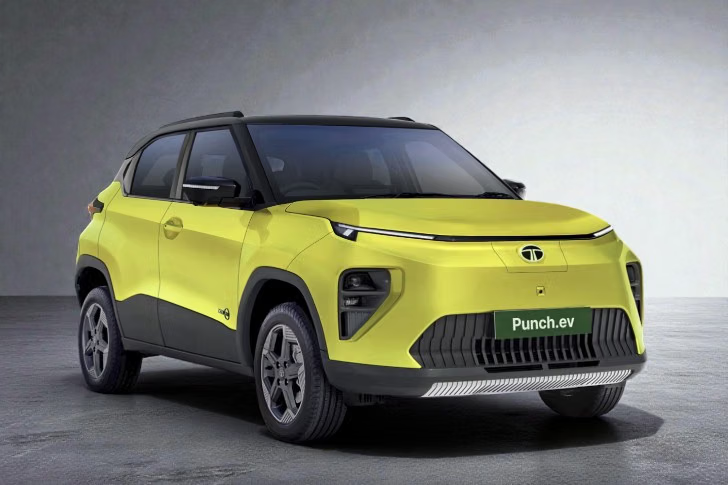
Up until now, BYD focused on premium offerings like the Atto 3, Seal, and e6 MPV. But those aren't exactly volume sellers for folks trading in a hatchback or a mid-spec Swift. By testing a smaller electric SUV on our turf, BYD is taking aim straight at the undisputed champion of Indian electric cars: the Tata Nexon EV.
A Fresh Compact Crossover Design That Means Business
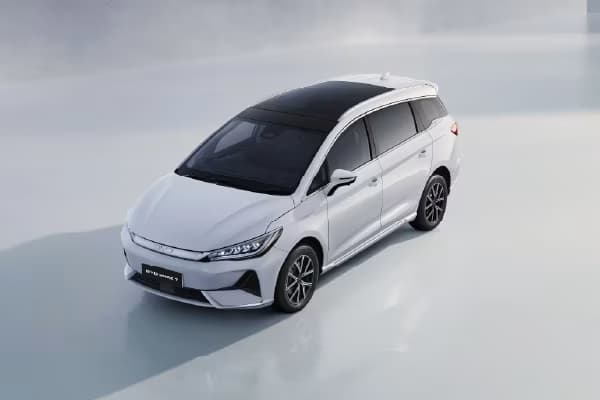
Visuals from the spy shots give us a fair idea of what's coming. Based on the Yuan Up sold in global markets, this electric SUV drops the aggressive swoops of the Atto 3 for a clean, boxier profile. It sports a bold front bumper, sleek LED headlights connected by a blacked-out panel, and flush-fitting door handles that give it a sleek look (yes, really).
Wheel arches look muscular, wrapped in thick body cladding to tackle our pothole-ridden city streets. You'll also notice roof rails and a distinct rear light bar running across the tailgate. Dimensionally, it's expected to sit right around the 4.3-meter mark internationally, though if BYD modifies it for local production or tax brackets, dimensions might adjust slightly. It looks like a proper modern SUV rather than a raised hatchback.
Battery Tech, Range, and What's Under The Floor
While official Indian specifications are still under wraps, global models rely heavily on BYD's famous Blade battery technology. That's a massive selling point because LFP Blade batteries are known for extreme durability and thermal stability—something crucial for harsh Indian summers where cooling is testy.
Internationally, this platform comes with battery options ranging around 32 kWh to 45 kWh. Power outputs usually sit between 95 hp and 175 hp depending on the variant. If brought to India in similar spec, you can expect a realistic real-world range around 300 km to 350 km on a full charge. Fast-charging capability will certainly be included, allowing a 30 to 80 percent charge in well under an hour at DC stations.
Specs At A Glance
Feature / Spec | Expected Details |
|---|---|
Body Style | Compact Electric SUV |
Battery Technology | BYD Blade Battery (LFP) |
Expected Battery Capacity | 32 kWh to 45 kWh (TBA) |
Estimated Real-World Range | 300 km - 350 km |
Expected Power Output | 95 hp - 175 hp |
Fast Charging Support | Yes (DC Fast Charging) |
Key Competitors | Tata Nexon EV, MG Windsor EV, Mahindra XUV400 |
How Does It Stack Up Against The Competition?
Tata Nexon EV currently dominates this space, and for good reason. Tata built an entire EV ecosystem and offers a tried-and-tested package with practical range. However, BYD's Blade battery technology gives it a severe technical edge when it comes to longevity and efficiency.
MG's Windsor EV and Mahindra's XUV400 are other key players in this zone. The Windsor EV offers massive interior space at an aggressive price tag, while the XUV400 relies on pure performance punches. Where BYD could win is interior quality and battery safety reputation—better than what many rivals offer in basic trims. If priced smartly, it can pull buyers away from top-spec Creta or Seltos petrol buyers considering a switch to electric.
The Good And The Not-So-Good
What We Like
- BYD's ultra-safe Blade battery technology promises peace of mind.
- Modern, clean SUV design that appeals to urban buyers.
- Spacious cabin with premium materials expected.
- Competitive driving range for daily commutes and weekend highway runs.
What Could Be Better
- BYD's touch-heavy climate controls can be distracting on Indian roads.
- Limited sales and service network compared to Tata or Mahindra.
- Import taxes might push pricing higher if sold via the CBU/CKD route initially.
Price & When You Can Buy It
Expecting a launch date right away would be premature, but seeing a fully disguised test mule means road testing is in advanced stages. A formal showcase or launch could happen late this year or early next year.
Pricing will make or break this car. If BYD manages to locally assemble it, pricing is expected in the ₹15 lakh to ₹18 lakh range. That puts it right against the long-range variants of the Nexon EV and mid-level variants of the MG Windsor EV.
Our Verdict
Seeing BYD test a mass-market EV on Indian soil is the best news budget EV shoppers have heard all year. Competition forces every carmaker to step up their game, and Tata won't be able to sit back comfortably anymore.
Here's the thing — if BYD gets the localization right and prices this under ₹16 lakh, it could become the default choice for buyers looking for top-tier battery safety without spending 30 lakhs. We'll be keeping a very close eye on this test mule as more details emerge!