What's The Big News?
Listen up, folks! Just when you thought you'd finally picked out your dream Hyundai and were ready to make that booking, there's a small but significant piece of news coming from the company. Hyundai Motor India has announced that they'll be jacking up prices across their entire model range.
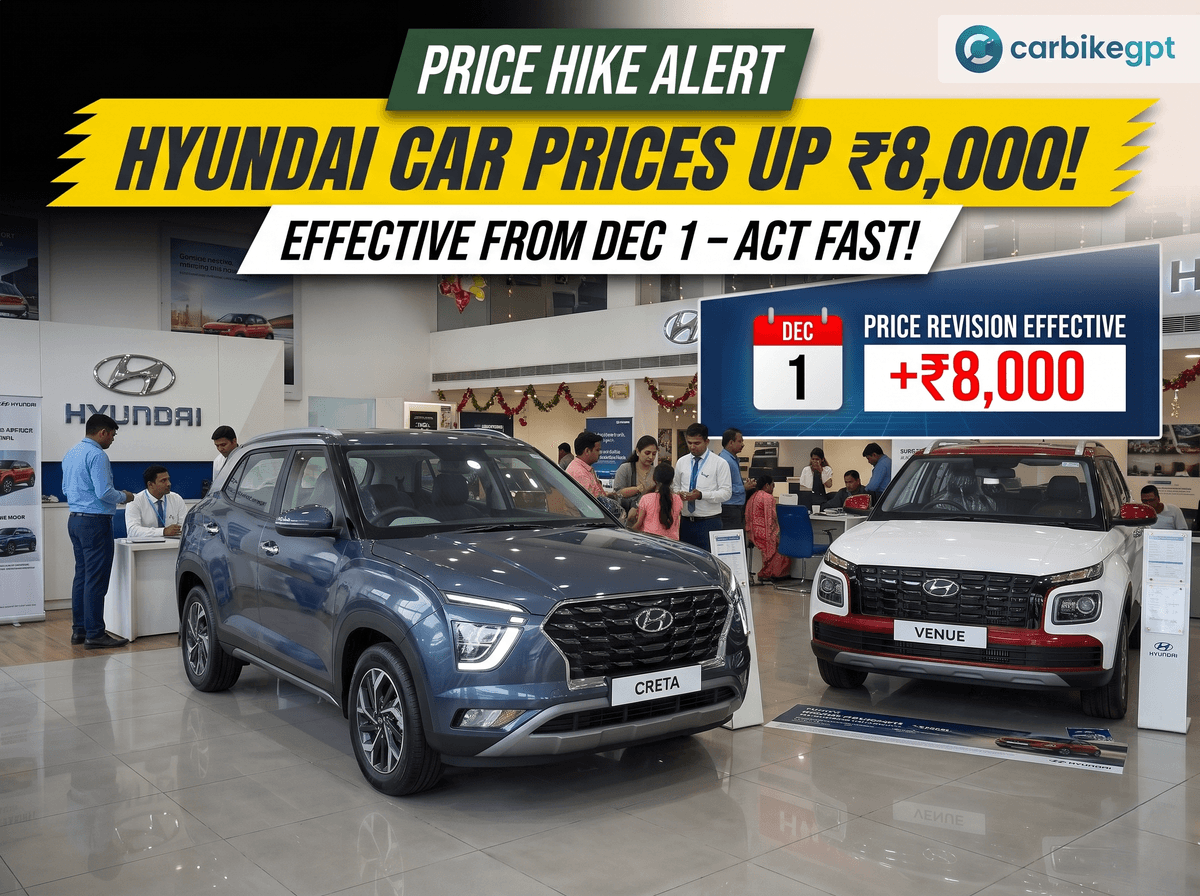
Yes, you heard that right. Starting December 1st, 2026, you'll have to shell out a little more for any new Hyundai car. The hike is pegged at 'up to ₹8,000', which might not sound like a fortune on a Creta, but for someone eyeing a Grand i10 Nios or an Exter, every rupee counts, doesn't it?
The Price Pinch: How Much More Are We Talking?
So, let's break down this ₹8,000 figure. It's a maximum, meaning some models might see a smaller increase, while others will hit that ₹8,000 ceiling. We haven't got a model-wise breakdown yet, which is typical for these kinds of announcements, but it's safe to assume it'll apply uniformly or with slight variations across their popular lineup, from the little Exter to the bigger Alcazar.
For the average Indian buyer who saves up for years to bring home a new car, an ₹8,000 hike is a real pinch. Imagine you've budgeted down to the last rupee for your new family car, and now you find out you need to cough up extra just as the year ends. It's not ideal, especially right after the festive season offers have faded away.
Why The Sudden Jump? Decoding Hyundai's Move
Now, the big question: why now? It's the usual suspects, really. Manufacturers often cite rising input costs – think steel, aluminum, plastics, and those crucial semiconductor chips. Global logistics also play a part, and let's not forget the ever-present pressure of inflation.
This isn't just a Hyundai thing, you know. We've seen similar moves from other players in the market throughout the year, or they're about to make them. Automakers are constantly battling increasing operational expenses, and unfortunately, a part of that burden often gets passed on to us, the consumers. It's a tough balancing act for them to maintain profitability while still offering competitive pricing.
Specs At A Glance
Since this news is purely about a price hike on existing models and not a new vehicle launch or update, there aren't any new 'specs' to detail. The mechanicals, features, and dimensions of your favourite Hyundai cars remain exactly as they are. What's changing, sadly, is just the sticker price. However, to give you an idea of the breadth of models affected, here's a look at some of Hyundai's popular offerings that will see this price revision:
Advertisement
Model | Segment | Engine Options (Existing) | Key Highlight |
|---|---|---|---|
Grand i10 Nios | Compact Hatchback | 1.2L Petrol | Value-for-money urban commuter |
i20 / i20 N Line | Premium Hatchback | 1.2L Petrol, 1.0L Turbo Petrol | Feature-rich, sporty design |
Exter | Micro SUV | 1.2L Petrol, CNG | Adventure-ready, compact footprint |
Compact SUV | 1.2L Petrol, 1.0L Turbo Petrol, 1.5L Diesel | Feature-packed, diverse powertrains | |
Creta | Mid-size SUV | 1.5L Petrol, 1.5L Diesel | Segment leader, premium features |
Mid-size Sedan | 1.5L Petrol, 1.5L Turbo Petrol | Sleek design, powerful engine options | |
Alcazar | 3-Row SUV | 1.5L Turbo Petrol, 1.5L Diesel | Spacious, premium cabin |
How Does It Stack Up Against The Competition?
Suddenly, that ₹8,000 makes a difference, doesn't it? For someone eyeing a Hyundai Venue, that hike might just push them to look harder at a Maruti Brezza or a Kia Sonet, especially if those rivals haven't announced similar hikes yet. Similarly, a pricier Creta might make the Maruti Grand Vitara or Kia Seltos look a tad more appealing on the value front.
Hyundai's strength has always been its combination of features, build quality, and after-sales service, often giving Maruti a run for its money. While ₹8,000 isn't a deal-breaker for loyalists, it does narrow the pricing gap with some competitors, forcing buyers to reconsider their options and do a bit more calculation before signing on the dotted line.
The Good And The Not-So-Good
What We Like
- The hike isn't astronomical; 'up to ₹8,000' is manageable for most segments.
- Hyundai's commitment to quality and features often justifies a slight premium.
- The brand's robust service network and resale value remain strong points.
What Could Be Better
- The timing could be better, right after the festive season when wallets are already stretched.
- A more granular, model-specific breakdown of the hike would help buyers plan better.
- Ideally, brands would absorb more of these costs to shield consumers.
Price & When You Can Buy It
So, if you've been eyeing that new Creta, an i20, or an Exter, you've got a small window. The price hike of 'up to ₹8,000' officially kicks in from December 1st, 2026. This means any booking or purchase made on or after that date will reflect the new, higher prices.
Your best bet? If you're serious about a new Hyundai, contact your dealership immediately. See if you can lock in your purchase at the current prices before the month ends. Otherwise, you'll be starting December with a slightly heavier bill for the same great car.
Our Verdict
Here's the thing — price hikes are never fun, especially when you've saved up for months to buy your dream car. But it's a reality of the market. Hyundai, like any manufacturer, has to deal with rising input costs, logistics, and inflation. While ₹8,000 might pinch, Hyundai still offers a strong package of features, reliability, and an extensive service network.
Honestly, if you're set on a Hyundai, I'd suggest booking it before December 1st. Otherwise, you'll be paying a little extra for the same car you could've bought for less a few days earlier. It's a small jump, yes, but why pay more if you don't have to, right?