What's The Big News?
Mahindra just dropped a bit of a bombshell for anyone planning to park a brand-new SUV in their driveway. If you've been saving up to bring home one of their big machines, you'll need to dig a little deeper into your pockets because prices have officially gone up. This revision came into effect on July 10, meaning those old quotation sheets you got from the dealership are now officially history.
We're looking at a price hike of up to 2.7% across several models in their Indian lineup. While that percentage might sound small on paper, it quickly adds up to a substantial amount when you're dealing with cars that easily cross the fifteen or twenty-lakh mark. It's a move that will surely make budget-conscious buyers pause and recalculate their finances before signing the dotted line.
Why Is Mahindra Making Us Pay More?
Every year, carmakers face the same old demons: rising input costs, fluctuating commodity prices, and logistics getting more expensive. Mahindra isn't immune to these market pressures, and this mid-year price correction is their way of balancing the books. But let's be real for a second—this hurts when you're an enthusiast who has been waiting months for delivery.
(and honestly, it shows) how much leverage Mahindra has in the Indian market right now. Their order books are practically bursting at the seams, with people waiting up to a year for certain variants of the Scorpio-N or Thar. When you have that kind of demand, you can easily pass on rising costs to the customer without worrying about empty showrooms. It's a luxury that not every manufacturer enjoys in today's competitive landscape.
Paying an extra twenty to forty thousand rupees on a mid-spec variant isn't easy to swallow. For that extra cash, you could have easily bought a premium helmet, a set of solid seat covers, or even paid for your first couple of road trips. On a fully loaded model, this increase is enough to make you rethink your budget, costing almost as much as a major variant upgrade on a mid-spec Swift.
The Impact On Your Wallet and Wait Times
If you booked your car three months ago and are still waiting for that elusive delivery call, you might be in for a rude shock. Unless you secured a specific price-protection deal during a launch phase, you'll almost certainly have to pay the price prevailing at the time of delivery. This is a common practice across the Indian auto industry, but it doesn't make it any less frustrating for the buyer who planned their loan amount down to the last rupee.
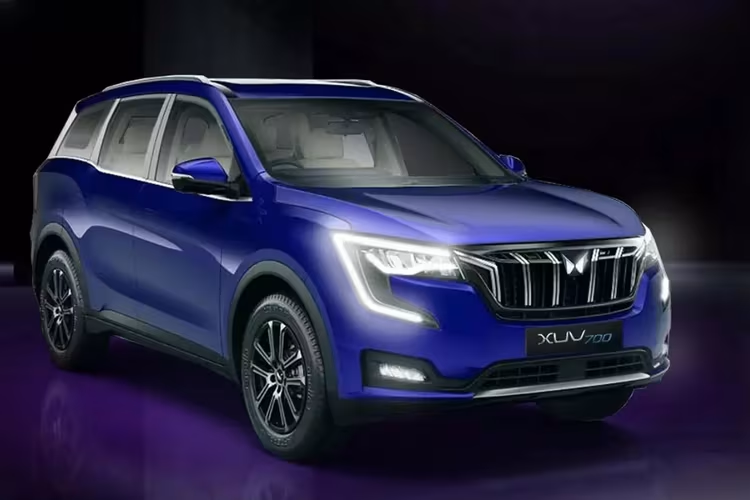
Look at the broader picture here. A 2.7% hike on a top-end XUV700 can easily translate to a difference of over fifty thousand rupees on-road. That's a significant jump, especially when you compare it to what Maruti or Hyundai offer in terms of stable pricing for their mid-size family cars. You could literally buy a high-end smartphone or a couple of home appliances for that price difference.
Choosing a car in India is deeply emotional, but it's also highly financial. We save for years, compare spec sheets like board exams, and negotiate hard for basic accessories. When a manufacturer raises prices overnight, it shifts the goalposts for thousands of families who were right on the edge of making a decision.
Specs At A Glance
While the price hike affects various models differently, here is a quick look at the core engine options powering Mahindra's most popular SUVs affected by this revision:
Model | Engine Options | Power (p/d) | Transmission |
|---|---|---|---|
Thar 3-Door | 1.5L Diesel, 2.2L Diesel, 2.0L Petrol | 117-150 PS | 6-Speed MT / 6-Speed AT |
Scorpio-N | 2.0L Petrol, 2.2L Diesel | 132-203 PS | 6-Speed MT / 6-Speed AT |
XUV700 | 2.0L Petrol, 2.2L Diesel | 156-200 PS | 6-Speed MT / 6-Speed AT |
Bolero / Neo | 1.5L Diesel | 75-100 PS | 5-Speed MT |
How Does It Stack Up Against The Competition?
Let's put things into perspective by looking at Mahindra's chief rivals, Tata and Hyundai. Tata Motors has been playing a very aggressive game with the Safari and Harrier, constantly updating them with tech and occasionally adjusting prices. However, Tata's pricing structure has also seen upward trends, making Mahindra's hike feel like an industry-wide pattern rather than an isolated move.
Hyundai, on the other hand, keeps things incredibly smooth. If you look at the Creta or Alcazar, their pricing feels a bit more predictable, and you rarely hear about buyers waiting for a year just to get a basic variant. While Hyundai might not offer the raw, ladder-frame ruggedness of a Scorpio-N, they certainly give you a more hassle-free buying experience for the money.
Comparing these brands shows that Mahindra still holds the upper hand when it comes to pure road presence and mechanical hardware. If you want a proper 4WD or a heavy-duty diesel engine that can munch miles without breaking a sweat, you don't have many options outside the Mahindra stable at this price point. This lack of direct competition in the rugged SUV space is exactly why Mahindra can get away with these frequent price adjustments.
The Good And The Not-So-Good
What We Like
- Unmatched road presence and macho appeal that rivals can't match at this price point
- Incredibly powerful diesel and petrol engine options that love highway cruising
- Robust build quality that handles broken Indian roads without rattles or squeaks
- Strong resale value because the demand for used Mahindra SUVs is always sky-high
What Could Be Better
- No price protection for buyers who have been waiting in line for months
- The price hike makes the top-end variants feel significantly more expensive on-road
- Lower-spec variants still miss out on basic features that you'd expect at this price
Price & When You Can Buy It
These revised prices are already live across all authorized Mahindra dealerships in India as of July 10. If you are planning to book now, your dealer will hand you the updated price list immediately. For those with existing bookings, it's highly recommended to call your sales advisor and get a clear picture of what your final on-road price will look like when your vehicle finally arrives.
Our Verdict
Here's the thing — if you've already set your heart on a Mahindra SUV, a 2.7% price hike isn't going to make you walk across the street to a rival showroom. The emotional pull of owning a Thar or a Scorpio-N is just too strong for a few thousand rupees to spoil the party. However, it does leave a slightly salty taste in the mouth for buyers who have been patiently waiting for months only to be handed a larger bill at the finish line.
Honestly, Mahindra makes some of the best engineered, most characterful SUVs in our market today. They've earned their success through sheer grit and great products. While we don't love paying more, the packaging and performance you get still justify the premium over most of the soft-roaders cluttering our city streets.