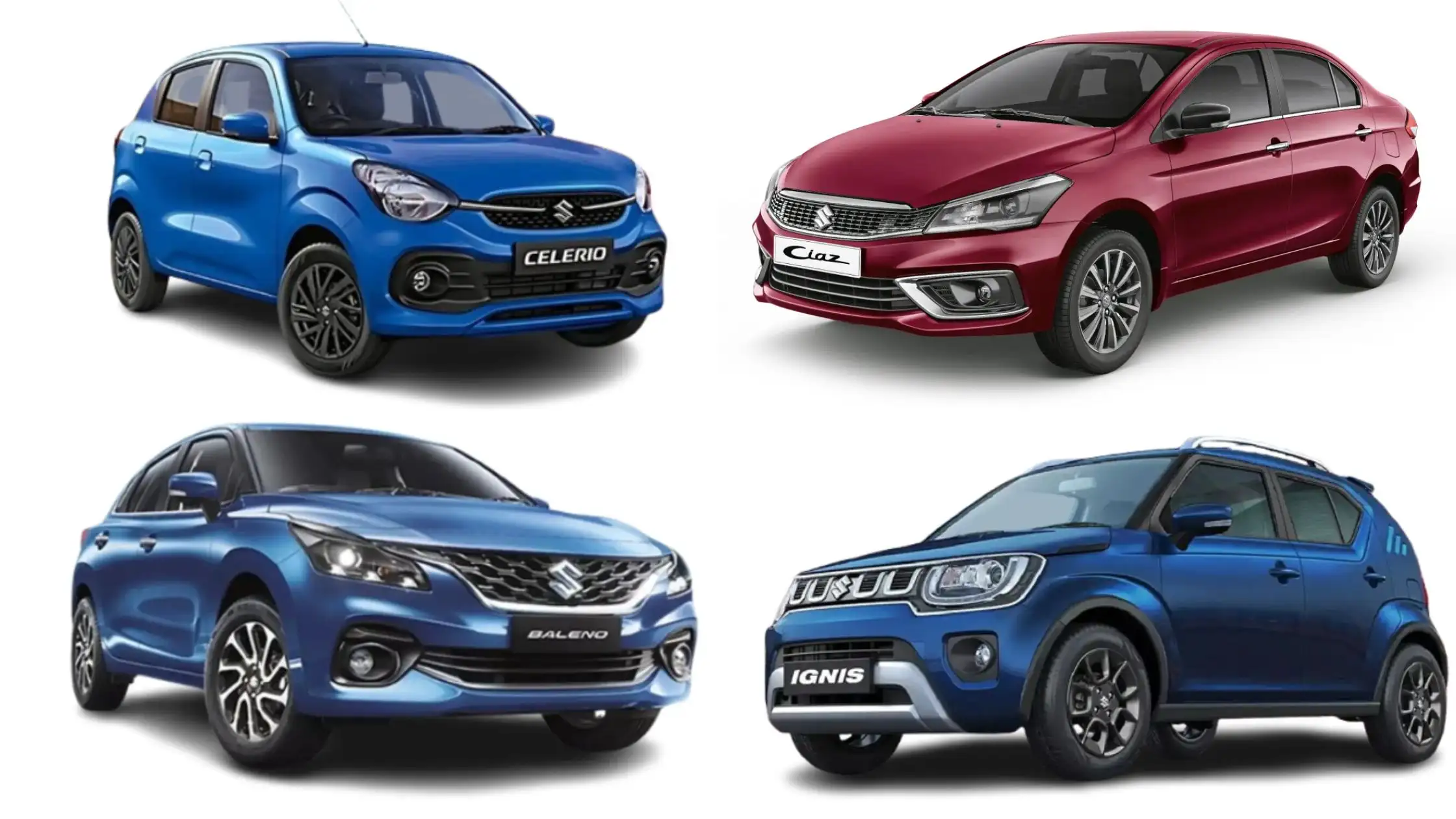
What's The Big News?
Maruti Suzuki isn't just satisfied being India's biggest carmaker anymore. They want half of the entire pie back. Remember when every second car rolling down an Indian highway had that familiar chrome S badge on its grille? Well, the Gurgaon-based auto giant has drawn up a massive, multi-segment product offensive to systematically reclaim that coveted 50% market share mark in the passenger vehicle segment.
It doesn't matter if you're shopping for an entry-level commuter hatchback for the price of a mid-spec Swift, looking to upgrade to a feature-loaded sub-4m compact crossover, or finally planning your move to a strong hybrid or electric vehicle. Maruti Suzuki wants a steering wheel in your hands regardless of your budget (and honestly, it shows). They're no longer content letting rivals steal market share in high-margin segments while they hold down the budget end of the market.
The All-Segment Attack: How Maruti Plans To Dominate
For years, key competitors like Tata Motors and Hyundai have been slowly chipping away at Maruti's overall market share. Buyers started flocking toward feature-packed compact crossovers and punchy turbo-petrol engines. Maruti realized that relying purely on low-cost hatchbacks wouldn't protect their crown in a market where buyers now want higher seating positions, big infotainment screens, and electric sunroofs as standard expectations.
By expanding aggressively into the SUV space—introducing models across different price points like the Brezza, Fronx, Grand Vitara, and Jimny—Maruti Suzuki has already started clawing back lost ground. But this new strategic push goes way beyond just throwing more SUVs into showrooms. It is about covering every single price micro-gap from ₹5 lakh all the way up to ₹25 lakh across both their Arena and Nexa retail networks (yes, really, they're plugging every single gap).
Budget Hatchbacks To Premium SUVs: Covering Every Price Bracket
Hatchbacks might be facing a temporary slowdown across India, but they still represent massive sales volume. Maruti knows better than anyone that first-time car buyers are the lifeblood of long-term brand loyalty. That's why they aren't abandoning their small cars like the Alto K10 or Swift; instead, they are refreshing them with better fuel efficiency and modernized cabins to keep budget-conscious buyers inside the family.
At the upper end of the spectrum, the push is all about higher average selling prices. The Grand Vitara proved that Indian buyers are fully willing to pay upper-tier money for a Maruti if it offers strong hybrid tech and premium features. Moving forward, expect this aggressive multi-powertrain strategy—combining petrol, factory-fitted CNG, strong hybrids, and upcoming electric vehicles—to act as a massive net designed so that almost no potential car buyer can slip through to a rival brand.
Specs At A Glance
Here is a breakdown of how Maruti Suzuki's current and upcoming portfolio strategy aligns across different segments in India:
Vehicle Segment | Key Maruti Models | Primary Powertrain Options | Strategic Focus Area |
|---|---|---|---|
Budget Hatchbacks | Alto K10, S-Presso, Celerio, Swift | 1.0L / 1.2L Petrol, CNG | Volume retention & first-time buyers |
Compact SUVs & Crossovers | Brezza, Fronx | 1.2L / 1.5L Petrol, CNG | Defending core sub-4-meter dominance |
Mid-Size SUVs | Grand Vitara | 1.5L Mild Hybrid, 1.5L Strong Hybrid, CNG | |
Lifestyle & Off-Road | Jimny | 1.5L K15B Petrol (4x4 standard) | Niche lifestyle market presence |
MPVs & Family Haulers | 1.5L Petrol, CNG, 2.0L Strong Hybrid | Dominating mass & premium taxi/family space | |
Upcoming EVs | eXV / eVX Concept-based SUV | All-Electric Powertrain (Battery specs TBA) | Tackling Tata's early EV lead |
How Does It Stack Up Against The Competition?
Winning 50% of the entire Indian car market is a colossal task today because the competition has never been stronger. Tata Motors currently holds a firm grip on the EV narrative with the nexon-ev">Nexon EV and punch-ev">Punch EV, while also winning big on crash test ratings and safety awareness. Hyundai and Kia, on the other hand, continue to set benchmarks for interior fit-and-finish, dual-screen setups, and refined turbo-petrol powertrains that appeal directly to tech-savvy urban buyers.
Where Maruti Suzuki retains a massive advantage over everyone else is their sheer reach and cost of ownership. You can drive a Maruti into the remotest corner of Spiti or a small village in Tamil Nadu, and you'll still find a mechanic or an authorized service station who knows the car inside out. Combine that unmatched service footprint with stellar real-world fuel economy—especially from their strong-hybrid setups—and Maruti has a value proposition that heart-over-head rivals still struggle to match for middle-class Indian families.
The Good And The Not-So-Good
What We Like
- Unmatched nationwide sales and service network that reaches every corner of India.
- Industry-leading fuel economy figures across petrol, CNG, and strong hybrid models.
- Diverse product range covering almost every ₹50,000 price jump from entry-level to premium.
- Consistently high resale value in the used car market compared to segment rivals.
What Could Be Better
- Safety perceptions still lag behind key rivals like Tata and Mahindra in mass-market buyers' minds.
- Late entry into the pure electric vehicle (EV) segment compared to early movers.
- Nexa and Arena dealership split can sometimes confuse buyers looking for clear upgrades.
Price & When You Can Buy It
This all-segment strategy isn't a future promise—it's actively unfolding right now across Maruti Suzuki's 3,000+ dealerships nationwide. Entry-level Arena models currently start around the ₹4 lakh to ₹5 lakh bracket, while top-tier Nexa offerings like the Grand Vitara and Invicto stretch up to the ₹20 lakh–₹29 lakh range (ex-showroom).
If you're waiting for their next big strategic moves, keep an eye on the upcoming 12 to 24 months. Maruti's first high-range electric SUV, based on the eVX concept, is expected to make its official commercial debut soon, followed by a broader rollout of affordable hybrid tech down their lower-segment lineup.
Our Verdict
Here's the thing — aiming for a 50% market share in today's insanely crowded Indian car market sounds almost ambitious to the point of disbelief. Indian buyers are far more demanding now; we look at safety ratings, we want panoramic sunroofs, we compare spec sheets line-by-line, and we aren't loyal to a brand just because our parents drove one.
However, if any carmaker in India has the sheer manufacturing capacity, dealer reach, and financial muscle to actually pull off a 50% market capture strategy, it is Maruti Suzuki. In my opinion, as long as they continue addressing their historical weak spots—specifically by adding modern safety kit as standard and speeding up their electric vehicle deployment—they stand a very real chance of getting very close to that magic number. For us buyers, this strategy simply means more options, better features, and tighter price wars, which is always a win in our book.