What's The Big News?
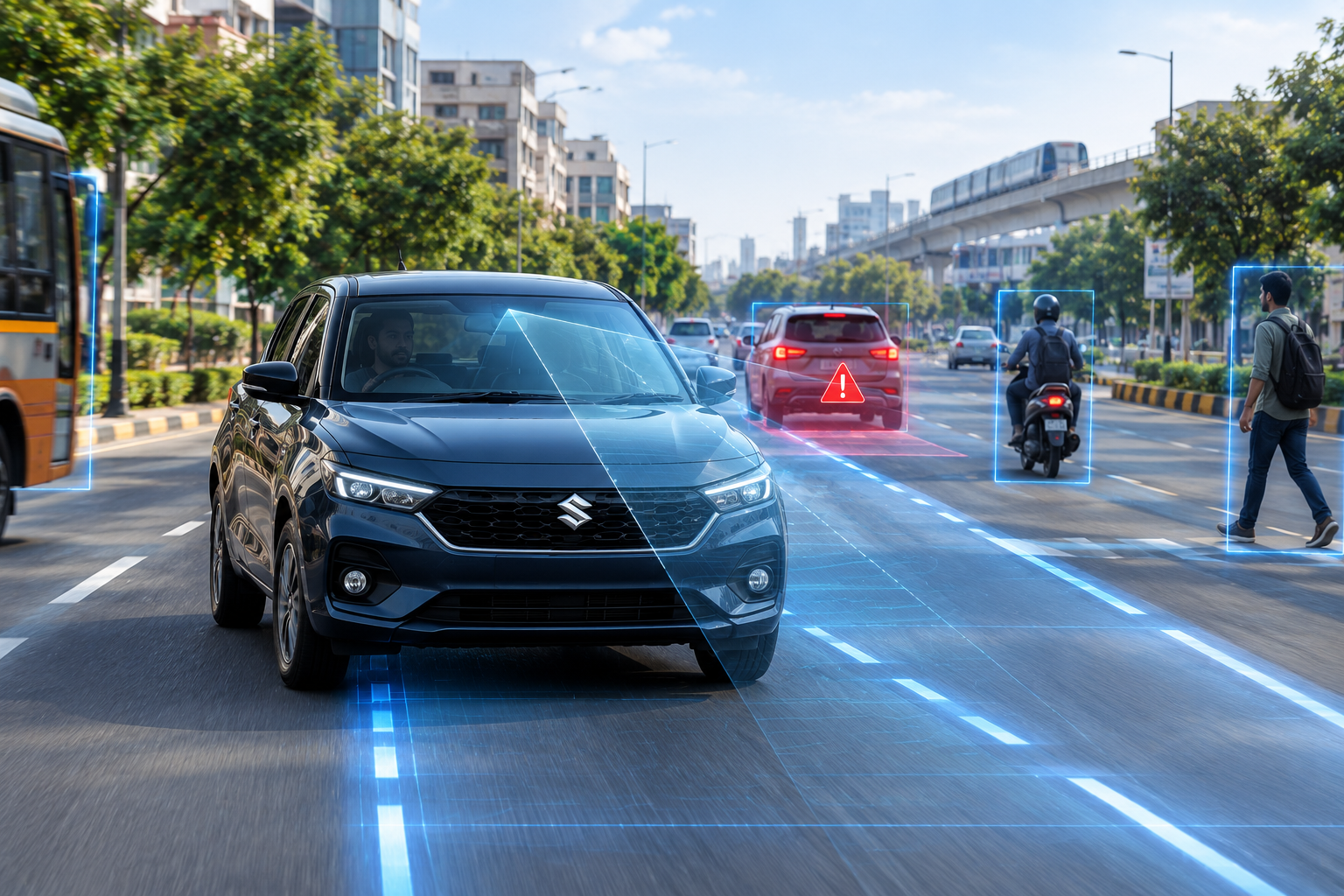
Maruti Suzuki, the undisputed king of Indian roads, is about to shake things up, big time. We're hearing strong whispers that they're gearing up to introduce ADAS – that's Advanced Driver-Assistance Systems – across their entire product portfolio. Yes, you read that right: not just the fancy top-end models, but potentially even your next WagonR or Swift could come packing advanced safety tech.
This isn't just some global mandate being passed down; it's a strategic move with India squarely in the crosshairs. The focus is clear: making essential safety functions standard, affordable, and, crucially, tailor-made for our incredibly diverse and often chaotic traffic conditions. It's a huge step towards democratizing safety features that, until now, were largely reserved for much pricier vehicles.
Suzuki's ADAS Plan: Safety for the Masses?
Suzuki's approach here is fascinating. Instead of just slapping on generic global ADAS kits, they're looking at solutions specifically designed to handle Indian roads. Think about it: sudden lane changes, unpredictable two-wheelers, pedestrians seemingly materializing out of thin air – standard ADAS systems can often struggle with this kind of dynamic environment. Their goal is to offer practical, reliable assistance that genuinely enhances safety without overwhelming the driver or becoming a nuisance.
This means we shouldn't expect a full Level 2 autonomous suite on a Celerio right off the bat. What's more likely are features like Forward Collision Warning, Automatic Emergency Braking (AEB) for city speeds, Lane Departure Warning, and perhaps a basic Lane Keep Assist. These are the kinds of proactive safety nets that can make a real difference in preventing everyday fender-benders or even more serious accidents. It’s about giving drivers an extra pair of eyes and a split-second advantage when things go south.
Tailoring Tech for Tough Indian Roads
Here's the thing — successfully implementing ADAS in India isn't just about putting sensors on a car. It's about calibrating them for our unique driving patterns. Our lane markings can be erratic, speed limits vary wildly, and horns are often used more for communication than warning. Suzuki knows this better than anyone. They'll need to fine-tune algorithms to prevent false positives from things like cows crossing the road or closely packed auto-rickshaws, which could otherwise make the system annoying and lead to drivers switching it off.
It's a huge undertaking, and honestly, it shows their commitment to the Indian market. They're not just selling cars; they're trying to make driving safer for millions. This focus on affordability means they'll have to innovate on the cost front too. We might see a phased rollout, perhaps starting with the more expensive models like the Grand Vitara and Brezza, before trickling down to the mass-market champions. The challenge will be to keep the overall price competitive while adding this significant technology.
Expected ADAS Features At A Glance
Feature | Status (Expected in Suzuki's ADAS suite) |
|---|---|
Forward Collision Warning (FCW) | Likely (Audible/visual alerts) |
Automatic Emergency Braking (AEB) | Likely (Especially for city speeds) |
Lane Departure Warning (LDW) | Highly Probable |
Lane Keep Assist (LKA) | Likely (Basic level, gentle steering correction) |
Adaptive Cruise Control (ACC) | Possible (More likely in higher-end models initially) |
Blind Spot Monitoring (BSM) | Possible |
Rear Cross-Traffic Alert (RCTA) | Possible |
How Does It Stack Up Against The Competition?
Right now, ADAS in affordable cars is a bit of a mixed bag. You've got Hyundai and Kia offering Level 2 ADAS in their Venue, Sonet, Creta, and Seltos, but mostly in their top trims. Honda City also offers a solid ADAS suite (Honda Sensing) on its higher variants. Even Mahindra has impressive ADAS on the XUV700, though that's a segment above.
What Suzuki is proposing is different. They're talking about making it widespread. If they can bring even essential features like AEB and LDW to models like the Baleno or Swift at a palatable price point, they'll be leapfrogging the competition in terms of market penetration for safety tech. Currently, many entry-level and mid-spec cars offer basic safety like airbags and ABS, but ADAS is still a luxury. This could force other manufacturers to re-evaluate their strategies, which is great news for the Indian car buyer.
The Good And The Not-So-Good
What We Like
- Democratization of crucial safety technology.
- Focus on India-specific traffic conditions for calibration.
- Potential to significantly reduce road accidents.
- Suzuki's commitment to making safety accessible, not just a premium feature.
- Will push other manufacturers to offer more as standard.
What Could Be Better
- Potential for increased vehicle costs, even if affordable.
- Initial learning curve for drivers unfamiliar with ADAS.
- Effectiveness of certain ADAS features in chaotic Indian traffic needs to be proven.
- We need to see how robustly these systems are implemented across the entire lineup.
- No concrete timelines or specific models announced yet.
Price & When You Can Buy It
Details on pricing and exact launch timelines are, as expected, under wraps. Suzuki hasn't officially announced which models will get ADAS first or when. However, the plan is clearly to integrate these features progressively across their entire portfolio.
We anticipate that the initial rollout might be seen in refreshed versions of existing popular models or new launches, possibly adding a slight premium to the ex-showroom price. But the underlying goal is affordability. Pricing will be a critical factor, and we expect Maruti to announce more concrete details closer to the official unveiling of these updated vehicles. Don't hold your breath for it in the next few months, but it's definitely on the horizon.
Our Verdict
Look, this is big. Maruti Suzuki introducing ADAS across its entire range isn't just a minor update; it's a potential paradigm shift for the Indian automotive market. For years, we've yearned for advanced safety features to trickle down to more affordable segments, and it looks like the country's largest carmaker is finally taking the lead.
Honestly, if Suzuki can deliver on its promise of making ADAS both effective for Indian conditions and truly affordable, they won't just be selling cars; they'll be selling peace of mind to millions of families. This move has the power to elevate safety standards across the board and push the entire industry forward. It's an exciting prospect, and we'll be watching closely to see how it unfolds.