What's The Big News?
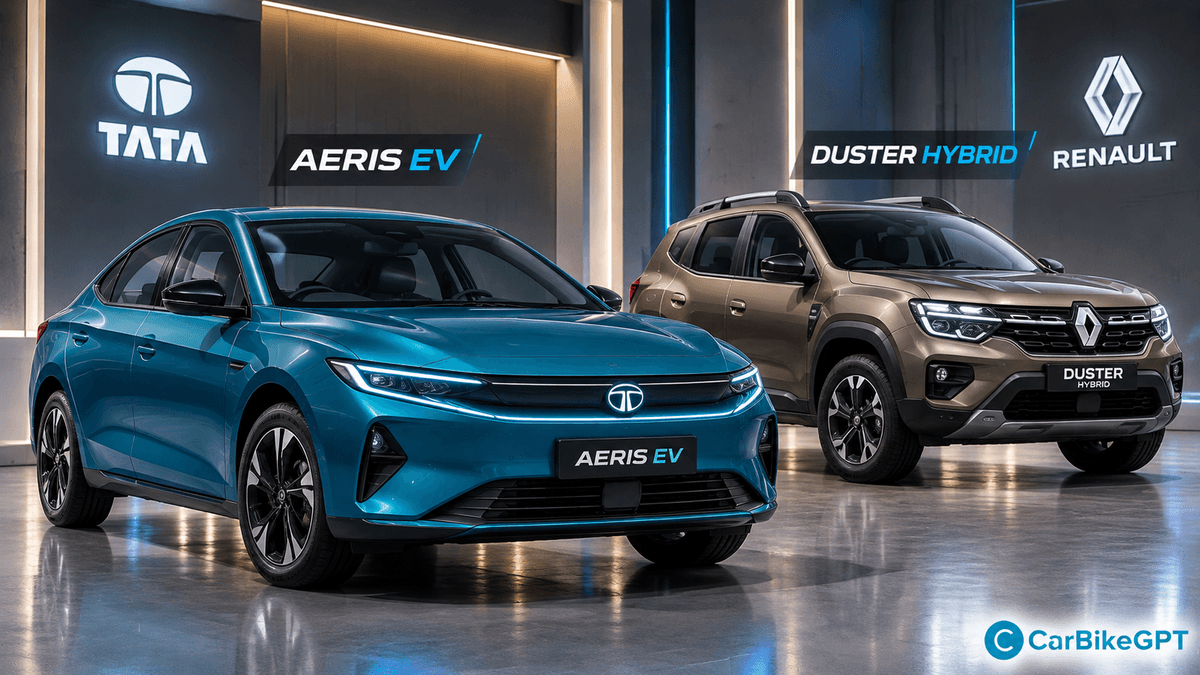
Alright, listen up, because CarBikeGPT.com has some serious tea to spill from the latest Autocar India November 2026 issue. It's not just a monthly read; it's a crystal ball into what's coming to our roads, and frankly, it's got us buzzing more than a double shot of chai on a winter morning. Two names are really standing out, hinting at big moves from two major players: Tata's mysterious new Aeris EV and the much-awaited return of the Duster, but this time with a strong hybrid twist.
You know how we feel about new cars, especially those that promise to shake things up. This isn't just about another launch; it's about what these vehicles mean for you, the everyday Indian buyer who dreams of that perfect ride. From what we're hearing, the Aeris EV could be Tata's next big electric play, while the Duster Hybrid signals Renault's serious intent to reclaim its lost glory in a fiercely competitive market. And yes, there's even a whisper about a Range Rover EV, but let's be real, most of us are more concerned with what's coming for the price of a mid-spec Swift, right?
Tata Aeris EV: The Next Electric Revolution?
Tata Motors, bless their cotton socks, has been on an absolute EV offensive. The nexon-ev">Nexon EV and tiago-ev">Tiago EV have shown them that India is ready to go electric, and they've been doing a commendable job of making EVs accessible. Now, the Aeris EV is making waves, and from what we can gather, it's not just another variant; it's likely a whole new model, possibly a more premium offering or a new body style altogether.
While official details are still under wraps tighter than a diplomat's secret, whispers suggest the Aeris EV will sit above the current Nexon EV in Tata's lineup. This means we're probably looking at a larger battery pack, pushing the range figures into serious territory – think 450-500 km on a single charge (ARAI estimated, of course). Design-wise, expect Tata's Impact Design 3.0 philosophy to shine through, possibly with even more futuristic elements. We're hoping for a cabin that feels truly premium, with all the bells and whistles like a large touchscreen, connected car tech, and maybe even ADAS features, which are becoming standard fare even in sub-15 lakh cars these days. This is Tata's chance to show they can not only lead the volume segment but also elevate the EV experience.
Duster Hybrid: Renault's Comeback Kid?
Remember the Duster? It was a beast, wasn't it? Rugged, practical, and it practically defined the compact SUV segment before the Creta came along and changed the game. Renault's been a bit quiet lately, but if this Duster Hybrid news is anything to go by, they're not just waking up; they're coming back with a vengeance. A strong hybrid Duster is exactly what the market needs, especially with fuel prices always playing hide-and-seek with our wallets.
We expect the new Duster Hybrid to be based on a global platform, likely bringing an advanced 1.5-litre strong hybrid powertrain to India. This setup should deliver some seriously impressive fuel efficiency numbers, easily challenging the current segment leaders like the Maruti Grand Vitara and Toyota Urban Cruiser Hyryder. What's crucial for the Duster isn't just the powertrain, though. It needs to retain that iconic rugged appeal, but with a modern twist. Think updated styling, a much-improved interior with better plastics and features, and a ride quality that can still handle India's 'characterful' roads without breaking a sweat. If Renault can nail the packaging and, more importantly, the pricing, this could be the comeback story of the decade. Honestly, a well-priced Duster Hybrid with genuine off-road cred (even if it's just FWD with good ground clearance) could be a massive hit for families looking for a versatile, fuel-efficient SUV.
Specs At A Glance
Feature | Tata Aeris EV (Expected) | Renault Duster Hybrid (Expected) |
|---|---|---|
Type | Electric SUV/Crossover | Strong Hybrid SUV |
Battery Pack | Expected larger capacity | N/A (uses hybrid battery) |
Range (ARAI est.) | Likely 450-500 km | N/A (fuel efficiency focus) |
Engine (ICE) | N/A | Expected 1.5L Strong Hybrid Petrol |
Transmission | Automatic (Single-speed e-CVT) | e-CVT |
Charging (EV) | Fast DC & AC support | N/A |
Features | Large touchscreen, Connected car tech, ADAS (likely) | Modern infotainment, Digital cluster, Safety features |
Launch Timeline | Mid-to-late 2026 (expected) | Early-to-mid 2026 (expected) |
How Does It Stack Up Against The Competition?
Let's talk rivals, because that's where the rubber meets the road. The Tata Aeris EV, if it indeed positions itself above the Nexon EV, will be going head-to-head with some established players. Think the higher variants of the Mahindra XUV400 and the MG ZS EV. The XUV400 offers good performance but the ZS EV counters with a more premium feel and better range figures in its top trim. The Aeris needs to bring a compelling package of range, features, and a truly modern cabin to justify its expected premium. Tata's biggest advantage will be its charging network and established EV trust, but the competition isn't sitting idle.
For the Renault Duster Hybrid, the battle will be intense in the strong hybrid SUV segment, currently dominated by the Maruti Grand Vitara and Toyota Urban Cruiser Hyryder. Both Maruti and Toyota offer excellent fuel efficiency and comfortable rides, plus the peace of mind of their extensive service networks. The Duster's unique selling proposition needs to be its renowned robustness and perhaps a slightly more engaging driving dynamic, without compromising on efficiency. It can't just be 'another hybrid'; it needs to be 'the Duster hybrid' – a car that appeals to both its loyalists and new buyers looking for a no-nonsense, economical SUV. If it can offer better ground clearance or a more robust suspension for our broken roads than its rivals, it's already got a leg up.
The Good And The Not-So-Good
What We Like
- Tata Aeris EV: Likely higher range and premium features, pushing Tata's EV game further.
- Tata Aeris EV: Strong possibility of advanced safety tech (ADAS) becoming standard.
- Renault Duster Hybrid: Return of an iconic nameplate with a much-needed fuel-efficient strong hybrid powertrain.
- Renault Duster Hybrid: Expected robust build quality and ride comfort for Indian conditions.
- Both models signal serious intent from their manufacturers in key growth segments.
What Could Be Better
- Tata Aeris EV: Pricing will be critical; a significant jump could deter buyers despite feature upgrades.
- Tata Aeris EV: Cabin quality and fit-finish need to be truly segment-leading, not just 'good for a Tata'.
- Renault Duster Hybrid: Needs a fresh, modern interior that doesn't feel dated from day one.
- Renault Duster Hybrid: Renault's service network isn't as widespread as Maruti's; this needs improvement for mass appeal.
- Both face stiff competition, so they can't afford to get anything wrong on launch.
Price & When You Can Buy It
Look, the pricing for both the Tata Aeris EV and the Renault Duster Hybrid is, as expected for models this far out, still under wraps. For the Tata Aeris EV, given its likely positioning above the Nexon EV, we're anticipating a starting price somewhere in the ₹18-25 lakh range (ex-showroom), depending on battery size and trim levels. It'll be a premium over the current Nexon EV, no doubt.
As for the Renault Duster Hybrid, it'll need to be aggressively priced to compete with the Grand Vitara and Hyryder. We'd expect it to fall within the ₹13-19 lakh bracket (ex-showroom) for its strong hybrid variants. Launch timelines are also speculative, but based on the Autocar scoop for November 2026, we're likely looking at a market debut for the Duster Hybrid in early to mid-2026, with the Aeris EV following in mid-to-late 2026. Keep your eyes peeled; these aren't too far off now!
Our Verdict
Here's the thing — the Indian automotive market is evolving at warp speed, and these two models, the Tata Aeris EV and the Renault Duster Hybrid, represent that shift perfectly. Tata is consolidating its EV dominance, and the Aeris EV could very well be their statement piece, proving they can do premium electric as well as mass-market. It's a bold move, and if they get the balance of range, features, and design right, it's going to be a huge hit. For Renault, the Duster Hybrid isn't just a new car; it's a make-or-break moment. They need to recapture the essence of the original Duster – rugged, practical, and value-for-money – while infusing it with modern tech and, crucially, that strong hybrid efficiency. If they manage to do that, the Duster could once again be a force to reckon with. We're genuinely excited to see how these two shape up, and rest assured, CarBikeGPT.com will be among the first to bring you all the juicy details as they emerge.