What's The Big News?
Walk up to any roadside tea stall and ask five car buyers what their biggest headache is right now. Nine times out of ten, you won't hear about 0-100 km/h acceleration or fancy ambient lighting. You'll hear about fuel bills, unpredictable petrol price hikes, and range anxiety. While the rest of the auto industry went all-in on aggressive pure-electric vehicle targets, Maruti Suzuki quietly took a completely different path. Market analysts and auto industry trackers are now pointing out that India's biggest carmaker is uniquely positioned to dominate the transition away from pure fossil fuels.
Instead of forcing everyday buyers into expensive battery packs with patchy charging infrastructure, Maruti put its money into a massive multi-fuel playbook. We are talking about factory-fitted S-CNG setups, clever 12V and 48V mild hybrids, and full strong-hybrid powertrains co-developed with Toyota. Now, as the initial hype around pure electrics hits a wall of real-world buyer hesitation in tier-2 and tier-3 towns, Maruti's pragmatic strategy is paying serious dividends.
The Multi-Fuel Strategy: Why CNG and Hybrids Make Sense
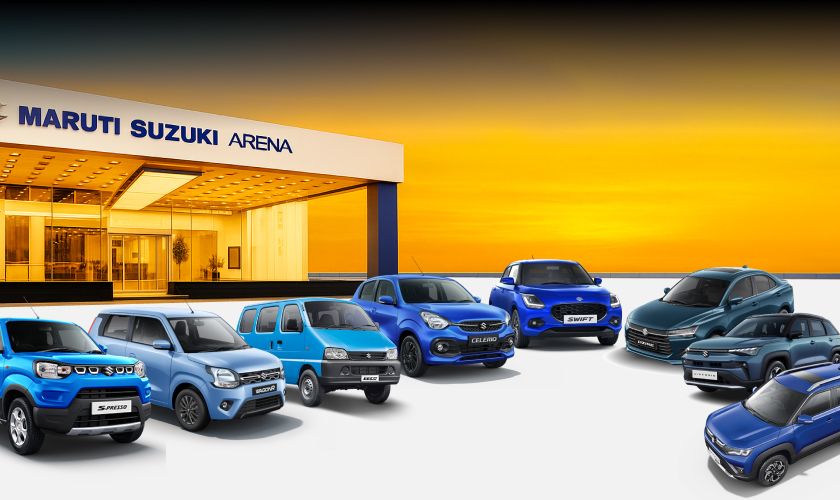
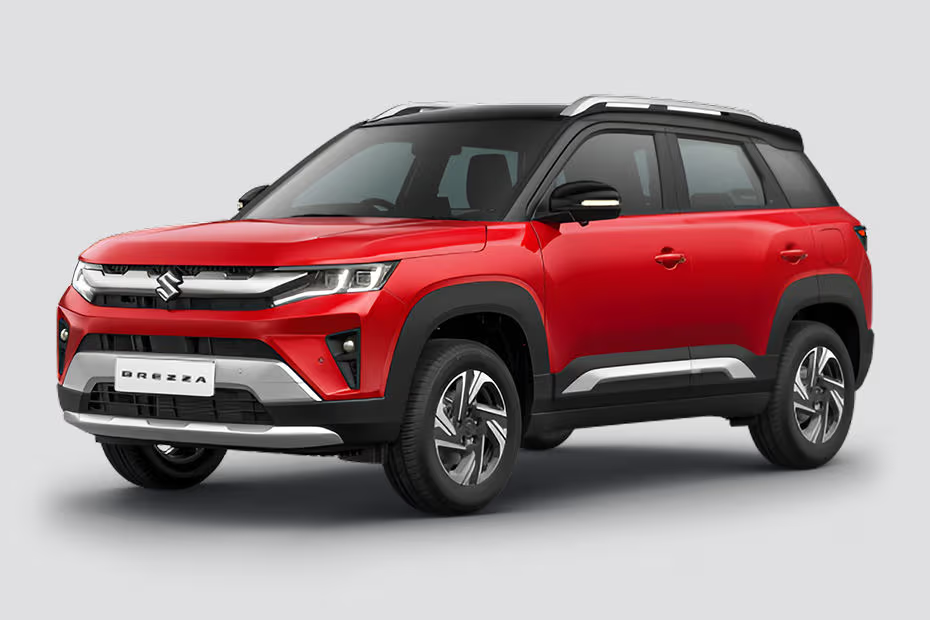
Let's be completely practical here. For a middle-class family looking to upgrade from an entry-level hatchback, shelling out ₹15 lakh or more for an electric crossover that can only travel 250 km on a highway charge just doesn't add up. Maruti understood this before anyone else. By equipping nearly every mainstream model in their portfolio — from the Alto K10 and WagonR up to the Brezza, Ertiga, and Grand Vitara — with refined factory CNG options, they gave commuters an immediate running-cost solution without asking them to change their driving habits.
Then came the strong-hybrid offensive. Partnering with Toyota gave Maruti instant access to bulletproof, self-charging full hybrid technology in cars like the Grand Vitara and the Invicto MPV. You get diesel-beating fuel efficiency figures in heavy bumper-to-bumper city traffic without ever needing to plug your car into an electrical wall socket (yes, really). While rivals scramble to build charging networks or justify diesel's uncertain regulatory future in metro cities, Maruti showrooms are delivering 25+ km/l real-world efficiency straight out of the box.
Where Does Electric Fit In? The EV Roadmap
Don't make the mistake of thinking Maruti is ignoring electric power completely. Their game plan isn't anti-EV; it's simply patient. Rather than rushing a half-baked conversion of an existing petrol platform to market just to grab headlines, Maruti and Suzuki spent years engineering a dedicated electric platform from the ground up.
Their first ground-up battery electric SUV — previewed by the eVX concept and slated to hit production soon — is designed from day one with high-capacity battery packs, global safety standards, and export-grade quality. By waiting for domestic battery supply chains to mature and component prices to stabilize, Maruti intends to arrive with scale and competitive pricing on day one. On top of that, they're aggressively testing flex-fuel powertrains and compressed biogas (CBG) infrastructure across rural India. It's a broad safety net that ensures no matter which fuel policy shifts next, their showroom floors have something ready to drive home.
Specs At A Glance
Powertrain Type | Current Maruti Applications | Key Advantage | Charging Required? |
|---|---|---|---|
Factory S-CNG | Extremely low running cost per kilometre | No | |
Smart Hybrid (Mild) | Baleno, Brezza, Ertiga, XL6, Grand Vitara | Affordable initial cost, start-stop efficiency | No |
Strong Hybrid (e-CVT) | Grand Vitara, Invicto | Unbeatable city mileage (27+ km/l claimed), silent EV driving | No |
Dedicated Battery EV | Upcoming Production e-Vitara / eVX (TBA) | Zero tailpipe emissions, modern dedicated skateboard platform | Yes |
How Does It Stack Up Against The Competition?
Take a look at Tata Motors. Tata deserves massive credit for building India's electric car ecosystem almost single-handedly with the nexon-ev">Nexon EV, punch-ev">Punch EV, and tiago-ev">Tiago EV. If you want a sub-₹15 lakh pure electric car right now, Tata is the default choice. However, pure EVs still represent only a small single-digit slice of total passenger vehicle sales across the country. By dominating the CNG space and locking in strong-hybrid volumes, Maruti captures the massive 90% chunk of the market that isn't ready for a charging plug.
Meanwhile, Hyundai and Kia have built phenomenal turbo-petrol and refined diesel engines, but their hybrid portfolio in India is still playing catch-up. Mahindra relies heavily on their brilliant mHawk diesel motors for their flagship SUVs like the Scorpio-N and XUV700, leaving them vulnerable if diesel regulations tighten further. Maruti simply has the widest safety cushion across price segments ranging from ₹4 lakh to ₹30 lakh.
The Good And The Not-So-Good
What We Like
- Massive factory-fitted CNG lineup with proven dual-ECU safety and widespread service support.
- Full strong-hybrid powertrains that deliver incredible 25-28 km/l real-world fuel economy in chaotic Indian traffic.
- Zero reliance on unpredictable public EV charging networks for everyday long-distance highway road trips.
- Affordable mild-hybrid tech available on high-volume models without driving up sticker prices drastically.
What Could Be Better
- Strong hybrid variants still carry a noticeable price premium over standard petrol variants in the Grand Vitara lineup.
- Boot space compromises in several CNG models due to cylinder placement.
- Late arrival to the pure battery-electric vehicle segment compared to domestic rivals.
Price & When You Can Buy It
You don't have to wait for future promises to tap into Maruti's alternative fuel lineup. Their S-CNG range is available right now across Arena and Nexa dealerships, commanding a standard premium of roughly ₹90,000 to ₹95,000 over corresponding manual petrol variants. If you're looking at strong hybrids, the Grand Vitara Intelligent Electric Hybrid kicks off around ₹18 lakh (ex-showroom), which easily recovers its premium if you drive over 1,500 km every month.
For those holding out for Maruti's all-electric era, the production-spec eVX crossover is expected to debut in 2025, with pricing likely to sit in the ₹18–24 lakh window to lock horns with the upcoming Hyundai Creta EV and Tata Curvv EV.
Our Verdict
Here's the thing — automotive transitions in a vast, diverse country like India never happen overnight in a straight line. Pure electric vehicles will certainly claim a larger market share over the next decade, but the bridge to get there requires practical, affordable, and easily accessible stepping stones. By mastering CNG, democratizing hybrid technology, and timing their EV entry carefully, Maruti has played a masterclass in market reading. If you want rock-bottom running costs today without worrying about where your next charging plug is coming from, Maruti's alternate-fuel garage remains the safest bet on Indian roads.