What's The Big News?
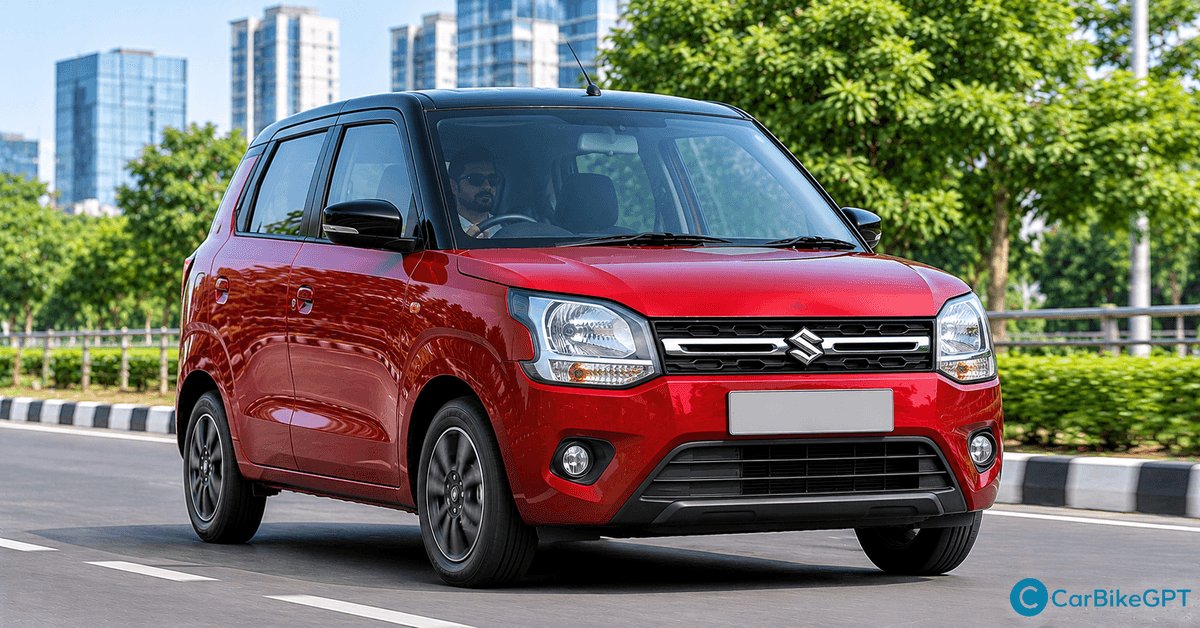
Walk into any car showroom in India, mention 'mileage', and chances are the Maruti Suzuki Wagon R will pop up in the conversation within seconds. It's almost legendary, isn't it? For years, this tall-boy hatchback has been the go-to choice for families and taxi operators alike, all thanks to its incredibly low running costs. But how exactly does Maruti pull off this mileage magic?
We're not just talking about a lucky strike here. Maruti Suzuki has systematically engineered the Wagon R to be a fuel-sipping marvel. From its heart – the engines – to its very bones – the platform – every aspect is tuned for maximum efficiency. It's a testament to practical engineering that resonates deeply with Indian buyers who count every single kilometre per litre.
The Science Behind The Sips: Engine & Tech
Let's get down to the brass tacks: the engines. The Wagon R comes with Maruti's proven K-series petrol engines – a 1.0-litre three-cylinder (K10C) and a 1.2-litre four-cylinder (K12N) unit. These aren't just any engines; they're packed with advanced tech specifically aimed at squeezing every last drop of fuel.
Both engines feature Dual Jet and Dual VVT technology (yes, really!). This essentially means they have two injectors per cylinder and variable valve timing on both intake and exhaust valves. What does that translate to for you? Super precise fuel delivery and optimal valve operation, leading to far better combustion and, crucially, phenomenal fuel efficiency. Couple that with Maruti's Idle Start/Stop system, which smartly shuts off the engine when you're stuck in traffic and restarts it seamlessly, and you've got a recipe for serious savings at the petrol pump.
It's not just the engine block. The Wagon R is built on Maruti's lightweight HEARTECT platform. Lighter car means less work for the engine, which in turn means less fuel consumed. Simple physics, brilliantly applied. Even the gear ratios in both the 5-speed manual and the AMT (Automated Manual Transmission) are optimised to keep the engine spinning at its most efficient RPM range, whether you're crawling through city traffic or cruising on the highway.
Practicality Meets Economy: Design & User Experience
Beyond the engine bay, the Wagon R's overall design also plays a subtle yet significant role in its efficiency. That iconic 'tall-boy' design isn't just for looks; it translates into incredible cabin space for its footprint. You get genuinely good headroom and legroom, making it comfortable for four adults, even on longer journeys – something you often don't find in cars for the price of a mid-spec Swift.
The compact footprint makes it a breeze to navigate through congested Indian cities and squeeze into tight parking spots. Less stress for the driver means a smoother drive, which can indirectly contribute to better fuel economy. While the interior might feel a bit basic compared to some flashier rivals, it's incredibly functional and robust, built to withstand the rigours of daily Indian usage without a fuss. Maruti knows its audience, and they've delivered a car that prioritises utility and low cost of ownership above all else.
Specs At A Glance
Feature | 1.0L Petrol | 1.2L Petrol | 1.0L CNG (Petrol mode) |
|---|---|---|---|
Engine | 998cc, K10C Dual Jet, Dual VVT | 1197cc, K12N Dual Jet, Dual VVT | 998cc, K10C Dual Jet, Dual VVT |
Max Power | 67 PS | 90 PS | 57 PS (CNG) / 67 PS (Petrol) |
Max Torque | 89 Nm | 113 Nm | 82.1 Nm (CNG) / 89 Nm (Petrol) |
Transmission | 5-speed MT / AMT | 5-speed MT / AMT | 5-speed MT |
Claimed Mileage | Up to 25.19 kmpl | Up to 24.43 kmpl | Up to 34.05 km/kg (CNG) |
Boot Space | 341 Litres | 341 Litres | Approx. 210 Litres (due to CNG cylinder) |
Safety Features | Dual Airbags, ABS with EBD, Rear parking sensors (Standard) | Dual Airbags, ABS with EBD, Rear parking sensors (Standard) | Dual Airbags, ABS with EBD, Rear parking sensors (Standard) |
Advertisement
How Does It Stack Up Against The Competition?
The Wagon R operates in a fiercely competitive segment, battling it out with players like the Tata Tiago, Hyundai Grand i10 Nios, and even its own sibling, the Celerio. Where the Wagon R consistently shines is in its combination of space and efficiency.
The Tata Tiago offers a solid build and a more premium feel, often scoring better on safety perception, but its fuel efficiency, while good, generally can't match the Wagon R's best figures. The Hyundai Grand i10 Nios ups the ante on interior features and premium aesthetics, making it feel a segment above inside, but again, its running costs usually won't beat the Wagon R, especially if you consider the CNG option. Maruti's own Celerio is very close in terms of engine tech and efficiency, but the Wagon R pulls ahead when it comes to sheer cabin volume and boot space, making it a more practical family hauler.
In short, while rivals might offer different strengths, the Wagon R’s ability to deliver segment-leading space alongside truly exceptional fuel economy remains its undeniable trump card.
The Good And The Not-So-Good
What We Like
- Outstanding Fuel Efficiency: Whether petrol or CNG, it sips fuel like a dream.
- Spacious & Practical Cabin: Best-in-class headroom and legroom for its footprint.
- Easy to Drive: Light controls and compact dimensions make it perfect for city commutes.
- Affordable Maintenance: Maruti's extensive network and low-cost parts are a huge plus.
- Reliable Engines: The K-series engines are known for their durability and refinement.
What Could Be Better
- Basic Interior Quality: While functional, plastics feel a bit rudimentary.
- Safety Perception: Despite standard safety features, some might crave a more robust feel.
- Highway Stability: Can feel a bit unsettled at higher speeds due to its tall design.
- Features List: Not as feature-rich as some rivals, especially in lower variants.
Price & When You Can Buy It
The great news is, the Maruti Wagon R isn't a future promise; it's a present reality. It's been a staple on Indian roads for years and continues to be readily available across Maruti Suzuki dealerships nationwide. Pricing generally starts from around ₹5.5 lakh and goes up to about ₹7.3 lakh (ex-showroom) for the top-end petrol AMT or CNG variants, making it an incredibly accessible and value-for-money proposition for many Indian households.
Our Verdict
So, there you have it. The Maruti Wagon R's legendary fuel efficiency isn't just clever marketing; it's a meticulously engineered characteristic that addresses the core needs of Indian car buyers. It’s a car that understands the value of every rupee, offering an unbeatable combination of space, practicality, and incredibly low running costs. Honestly, for someone whose priority is rock-bottom running costs and maximum cabin space for the family, the Wagon R remains an unbeatable package in its segment.